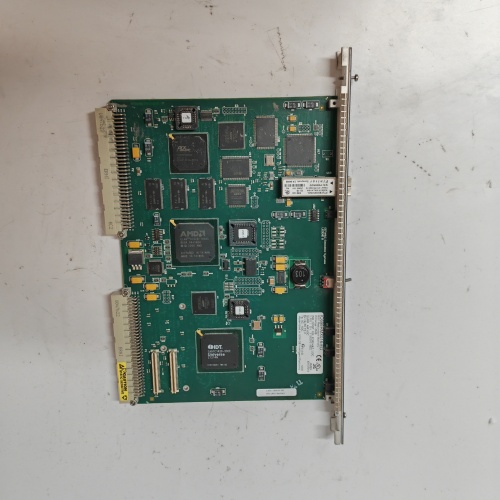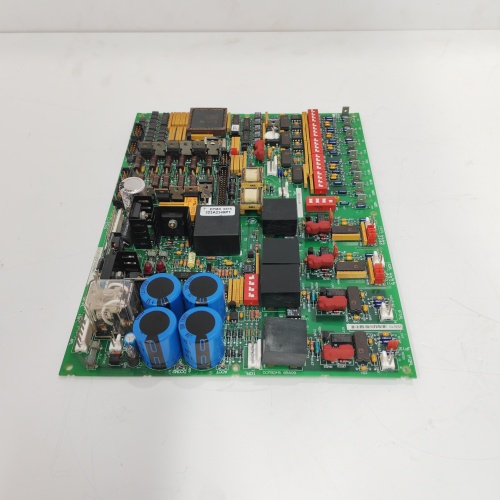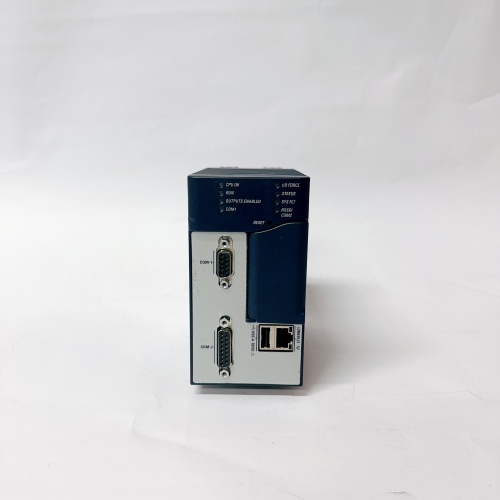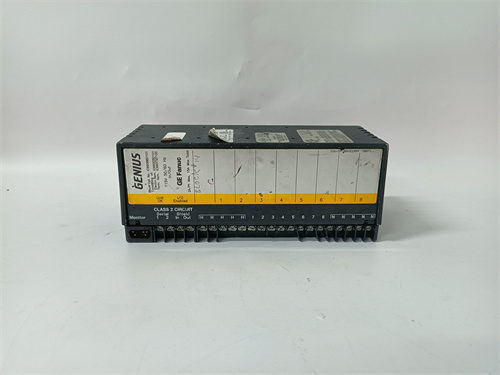
GE IC660BBD101 | Genius I/O 24V DC Discrete Input Module
$ 96.54
Description Key Technical Specifications Parameter Specification Part Number IC660BBD101 Product Type Discrete Input Block Series Genius I/O Input Channels 16 points Input Voltage 24V DC (sink/source compatible) Input Type Sinking or sourcing (selectable common) On-State Voltage 15-30V DC minimum Off-State Voltage 0-5V DC maximum Input Current 7 mA typical at 24V DC Isolation 1500V optical isolation (group to logic) Response Time 1 ms typical (filter configurable) Network Interface Genius bus (up to 153.6 kbaud) Termination Removable terminal strips (18 AWG max) Mounting DIN rail or panel mount Indicators Per-point LED status, module health, bus activity Condition New Surplus (Original Packaging) Product Introduction The GE IC660BBD101 is a 16-point 24V DC discrete input block from the Genius I/O series. It functions as a distributed I/O device, communicating directly with PLCs (Series 90-70, 90-30) or host controllers over the Genius bus. Each input point has a dedicated LED for immediate status indication, and the removable terminal strips simplify wiring and replacement. The IC660BBD101 accepts both sinking and sourcing field devices, configurable via the common connection. This flexibility makes it a favorite for retrofits where field wiring conventions vary. This unit is new surplus, factory-sealed in original GE packaging. Genius components are mature but widely deployed; contact us for current stock and firm pricing. Frequently Asked Questions (FAQ) Q: Can the IC660BBD101 be used as a standalone block without a Genius bus controller? A: No. The GE IC660BBD101 requires a Genius bus master to communicate. It’s not a standalone I/O block—it’s a bus slave. You need either a Genius bus controller in a PLC rack (like the IC697BEM731 in Series 90-70) or a PC interface card. Without a bus master, the block powers up but never exchanges data. I’ve seen contractors wire these beautifully and then wonder why the PLC sees no inputs. Q: What’s the difference between IC660BBD101 and IC660BBD100? A: The IC660BBD101 has removable terminal strips; the IC660BBD100 has fixed terminal strips captive to the block. If you do frequent module swaps or need to pre-wire panels, the -101 version saves massive downtime. Pull the terminal strip, land it on the new block, and you’re done. No re-terminating 16 field wires. In my book, the IC660BBD101 is worth the slight premium every time. Q: Can I mix AC and DC inputs on the same block? A: Absolutely not. The IC660BBD101 is specifically a 24V DC input block. The input circuitry is designed for DC levels only. Applying 120V AC will instantly destroy the optocouplers. If you have mixed signal types in the same panel, you need separate blocks— for DC, IC660BBA series for AC. Mixing voltages on the same block is a rookie mistake that costs hardware. Q: How do I set the Genius bus address on this module? A: The GE IC660BBD101 uses two rotary switches on the front—one for tens, one for ones. You set the address from 0 to 31 (though address 31 is typically reserved for broadcast). Important: you must cycle power after changing the address for it to take effect. Also, take a photo of the switch settings before removal. I can’t count how many times I’ve seen modules go in with wrong addresses because someone forgot the original setting. Q: What baud rate should I run on the Genius bus with this block? A: It depends on cable length and noise environment. The supports 153.6k, 76.8k, and 38.4k baud. For short distances (<1000 ft) in clean control rooms, 153.6k works fine. For long runs through plant floors with VFDs and welders nearby, drop to 38.4k for reliability. The module auto-detects baud rate at power-up based on bus traffic. Start high, and if you see bus errors, step down. Reliability beats speed every time in industrial environments. Q: Does this module support hot-swapping on the Genius bus? A: Yes, with caveats. The Genius bus protocol supports live insertion and removal. The can be swapped while power is applied and the bus is active. However, when you pull the block, all its inputs disappear from the controller instantly. If those inputs are used in logic, expect consequences. Also, the bus will see a momentary glitch. For critical processes, I still recommend a controlled shutdown if possible. Hot-swap is for emergencies, not routine maintenance. Q: What’s the maximum cable distance from the block to field devices? A: The GE IC660BBD101 itself doesn’t limit distance—field wiring practices do. The inputs sense voltage at the terminals. For 24V DC, voltage drop over long runs can cause false off-states. Keep runs under 500 feet with 18 AWG wire. Beyond that, use larger gauge or consider remote I/O closer to the field devices. I’ve chased intermittent “input failed” faults that turned out to be 24V dropping to 14V at the module due to undersized wire over 1000-foot runs. IC695CRU320-EG SGM-02L3B4CL DCS CBL-YRC061-1 DCS FPS400-24/6 DCS N5743A DCS 1769-L31A DCS GMSV36-01-F91/115F/E Email: [email protected] Phone: 86 15340683922 Sales:Wu Jiedong Our products are guaranteed for 1 year, with new and original production stopped and imported spare parts. All prices listed on the official website are subject to confirmation by contact: Wu Jiedong (manager). Our product: brand new original packaging Our warranty: All new or repaired parts have a 12 month warranty period beginning Our payment: 100% telegraphic transfer of inventory items before shipment, conditions can be proposed! If you have any downtime spare parts that you cannot find, please feel free to call or use email to contact me. If there are issues that the product cannot solve, please contact me. Product prices can be negotiated. Please do not consider contacting me!